
Christian Brückner
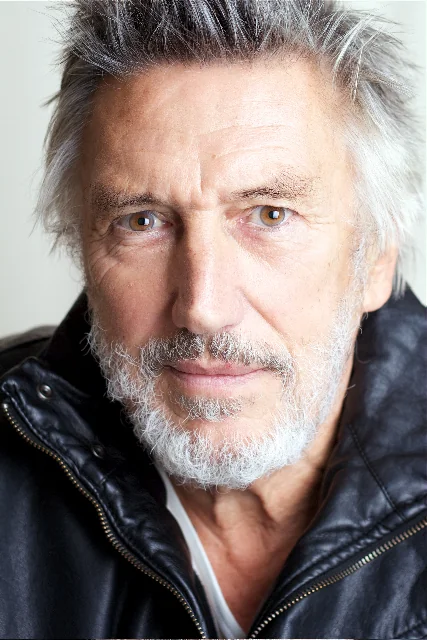
Image from Wikipedia
Image from Wikipedia
Christian Brückner – The Distinctive Voice of German Narration
Between Cinema, Literature, and Audiobook Art: A Voice that Shaped Generations
Christian Brückner is among the most distinctive voices in the history of German culture. Born on October 17, 1943, in Waldenburg/Silesia, he gained recognition over decades as an actor, radio play speaker, audiobook interpreter, and voiceover artist. Especially noted for being the permanent German voice of Robert De Niro, as a documentary voice-over, and as a reciter, he has set standards; the German-speaking press aptly refers to him as “The Voice.” ([de.wikipedia.org](https://de.wikipedia.org/wiki/Christian_Br%C3%BCckner?utm_source=openai))
His career encompasses stage work, film, dubbing, and literary interpretation into a rarely seen artistic profile. Brückner represents a form of vocal art where technique, temperament, and text comprehension merge into an unmistakable sound image. His voice possesses weight, friction, and warmth simultaneously—qualities that have made him a significant figure in the German-speaking media landscape for decades. ([staatsoper-berlin.de](https://www.staatsoper-berlin.de/en/kuenstler/christian-brueckner.1912/?utm_source=openai))
The Early Years: Acting, Studies, and First Steps
Brückner did not start solely as a speaker, but rather followed a pathway through acting and the humanities. He studied German studies, theater studies, and journalism, but dropped out of university and subsequently gained experience on theater stages in Berlin, Klagenfurt, Freiburg im Breisgau, and New York City. This early theater practice laid the foundation for his later authority in handling language, rhythm, and character profiles. ([de.wikipedia.org](https://de.wikipedia.org/wiki/Christian_Br%C3%BCckner?utm_source=openai))
Even at this stage, it was evident that Brückner focused not on decorative presence but on substance. His work with literary material and scenic forms shaped an artistic self-understanding that later unfolded its full effect in radio plays and audiobooks. The combination of theatrical experience and linguistic discipline became a central characteristic of his broader music career: not musically in the narrow genre sense, but musically in the structure of voice, pause, and dynamics. ([de.wikipedia.org](https://de.wikipedia.org/wiki/Christian_Br%C3%BCckner?utm_source=openai))
The Breakthrough in Dubbing
A decisive turn came with his work in dubbing. In 1967, he first attracted attention by dubbing Warren Beatty in "Bonnie and Clyde"; his voice gained widespread recognition with the British series "The Onedin Line." However, the real breakthrough followed in 1974 with "The Godfather – Part II," after which he became the fixed German voice of Robert De Niro. Two years later, Martin Scorsese chose him for "Taxi Driver," and since then Brückner has lent his own vocal identity to one of world cinema's most important actors. ([de.wikipedia.org](https://de.wikipedia.org/wiki/Christian_Br%C3%BCckner?utm_source=openai))
The impact of this long-standing dubbing partnership extends far beyond individual films. With a few exceptions, Brückner has dubbed De Niro in 92 films; additionally, he has lent his voice to Martin Sheen, Peter Fonda, Harvey Keitel, Burt Reynolds, Gary Oldman, Robert Redford, Dennis Hopper, Gérard Depardieu, Alain Delon, Donald Sutherland, and Jon Voight, among others. This versatility makes him one of the most defining figures in German dubbing art, where not just translation but also interpretation occurs. ([de.wikipedia.org](https://de.wikipedia.org/wiki/Christian_Br%C3%BCckner?utm_source=openai))
Radio Play, Audiobook, and the Art of Literary Reading
Brückner's artistic greatness unfolds particularly in audiobooks and radio plays. Since 1970, he has been active as a radio play speaker according to Kulturportal; later, the great works of world literature became his true domain. Among his most famous readings are unabridged versions of "The Odyssey" and "Moby-Dick," as well as Thomas Wolfe's "Look Homeward, Angel" in an extensive recording. ([kulturportal.de](https://kulturportal.de/en_En/kulturschaffende/christian-brueckner.108463?utm_source=openai))
His style is never merely declamatory. Brückner shapes texts with a mix of calm, tension, and precise emphasis, transforming prose into acoustic drama. This is precisely where his authority as a speaker lies: he does not replace music, but instead creates musical structure in his speech. From a technical perspective, he works with timing, breath control, register changes, and emotional balance at a level that elevates audiobook interpretations to independent works of art. ([buecher-magazin.de](https://buecher-magazin.de/magazin/gesichter-und-geschichten/interview/es-ist-eine-auszeichnung-der-stimme-erkannt-zu-werden?utm_source=openai))
Parlando: Own Label, Literary Signature, Awards
Together with his wife Waltraut, Brückner founded the audiobook publisher Parlando in 2000. The label focused on literary prose, poetry, and political writings in audiobook form and developed into a clearly defined address for demanding vocal artistry. In 2005, Parlando was awarded the German Audiobook Prize; in 2012, Brückner also received the Special Award of the German Audiobook Prize for his lifetime achievement. ([de.wikipedia.org](https://de.wikipedia.org/wiki/Christian_Br%C3%BCckner?utm_source=openai))
This editorial work demonstrates how strongly Brückner influences not only as an interpreter but also as a culturally formative brand. His own label allowed him a curated selection of texts that matched his voice and reading concept. As a result, his discography, if understood in this sense, gains a special coherence: less oriented towards quick market logic, but more towards literary substance and acoustic depth. ([de.wikipedia.org](https://de.wikipedia.org/wiki/Christian_Br%C3%BCckner?utm_source=openai))
Awards and Critical Recognition
The public acknowledgment of his work is exceptionally clear. In 1990, Brückner received the Adolf Grimme Prize Special in Gold for "outstanding speaking performances," in 2006 the Lesewerk Prize as an honorary awardee, and in 2012 the Special Prize of the German Audiobook Prize for his lifetime achievement. The Berlin and national press have also honored him for years as a voice of exceptional radiance and consistency. ([de.wikipedia.org](https://de.wikipedia.org/wiki/Christian_Br%C3%BCckner?utm_source=openai))
Critical reception regularly highlights the unique quality of his voice: rough, sensitive, sovereign, and at the same time of great presence. Such descriptions are more than praise; they point to a speaker aesthetic that does not obscure text but rather charges it. Brückner has thus become a reference point for what German vocal artistry can achieve when precision and personality come together at the highest level. ([boersenblatt.net](https://www.boersenblatt.net/news/verlage-news/mit-parlando-hoert-ein-ausnahmeverlag-auf-253617?utm_source=openai))
Cultural Influence: The Voice as a Trademark
Brückner's cultural influence is based on recognizability and continuity. Hardly any other German voice is so closely linked to international cinema, particularly with Robert De Niro and the aesthetics of New Hollywood cinema. At the same time, he shifted the perception of the audiobook toward high culture by not just reading literature but reinterpreting it. ([de.wikipedia.org](https://de.wikipedia.org/wiki/Robert_De_Niro?utm_source=openai))
His works extend even into documentary and musical contexts, such as when he collaborates with musicians and directors in films, radio plays, or literary programs. This makes him a pivotal figure between film culture, broadcasting tradition, and literary mediation. Listening to Brückner offers not just a performance but a piece of German-language media history in concentrated form. ([de.wikipedia.org](https://de.wikipedia.org/wiki/Christian_Br%C3%BCckner?utm_source=openai))
Current Projects and Late Presence
Even in recent times, Brückner remains active, especially in the areas of readings, stage, and literary programs. In 2020 and 2021, audiobooks featuring his participation continued to be released, including works by Thomas Hettche, Richard Ford, and James Baldwin. In 2022, he also dubbed Sir David Attenborough in the five-part documentary series "A Planet Before Our Time." ([de.wikipedia.org](https://de.wikipedia.org/wiki/Christian_Br%C3%BCckner?utm_source=openai))
Recent mentions in cultural events and programs show that his voice remains in demand. Therefore, Brückner is not merely a nostalgic reminiscence, but an active part of contemporary culture. It is this combination of experience and present relevance that makes his art so exciting: he represents classical vocal artistry with lively, contemporary significance. ([kunstpalast.de](https://www.kunstpalast.de/wp-content/uploads/2023/07/2024-01-14-Lesung-Christian-Brueckner.pdf?utm_source=openai))
Conclusion: Why Christian Brückner Fascinates to This Day
Christian Brückner fascinates because he does not merely use language but transforms it into sound. His music career in the extended sense of vocal art connects acting, dubbing, audiobook production, and literary interpretation into an exceptionally cohesive artistic biography. Those interested in German cultural history, vocal artistry, and the power of storytelling will find in him a reference figure of the highest order. ([de.wikipedia.org](https://de.wikipedia.org/wiki/Christian_Br%C3%BCckner?utm_source=openai))
His work demonstrates how character, atmosphere, and cultural memory emerge from a voice. This is precisely why experiencing Christian Brückner live is worthwhile: not as a mere speaker, but as a master of nuance who carries every word and gives depth to each text. ([buecher-magazin.de](https://buecher-magazin.de/magazin/gesichter-und-geschichten/interview/es-ist-eine-auszeichnung-der-stimme-erkannt-zu-werden?utm_source=openai))
Official Channels of Christian Brückner:
- Instagram: No official profile found
- Facebook: No official profile found
- YouTube: No official profile found
- Spotify: No official profile found
- TikTok: No official profile found
Sources:
- Wikipedia – Christian Brückner
- Staatsoper Berlin – Christian Brückner
- Kulturportal – Christian Brückner
- lit.COLOGNE – Christian Brückner
- Börsenblatt – An Exceptional Publisher Closes with Parlando
- Tagesspiegel – “My Voice is a Privilege”
- Bücher-Magazin – Interview with Christian Brückner
- KunstSalon – Brückner, Christian
- WESTPARK STUDIOS – Christian Brückner
- Wikipedia: Image and Text Source