
HA Schult
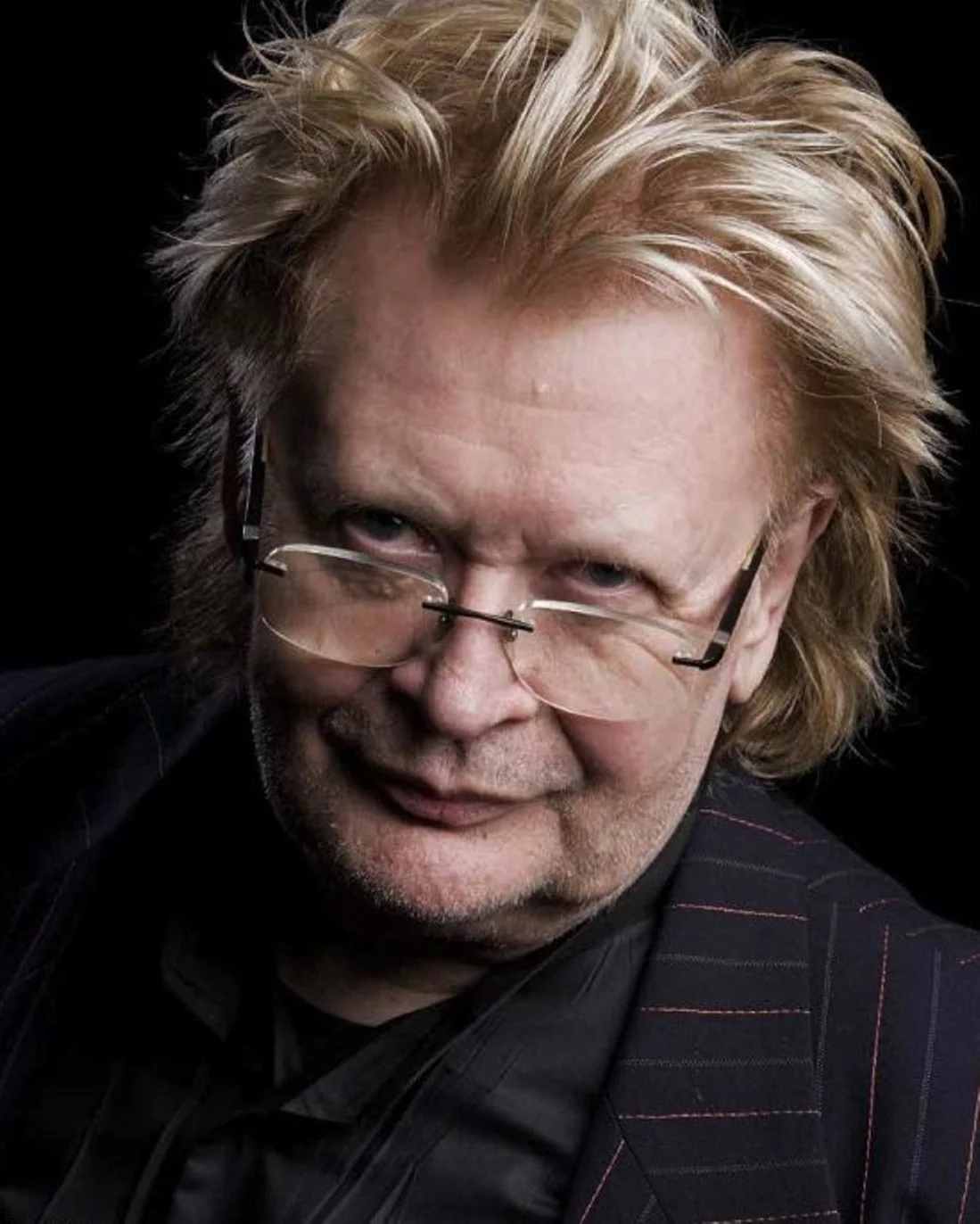
Image from Wikipedia
Image from Wikipedia
HA Schult: The Action Artist Transforming Trash, Morality, and World Politics into Striking Images
An Artist's Life Amidst Ruins, Protest, and Global Publicity
HA Schult, born on June 24, 1939, as Hans-Jürgen Schult in Parchim, is one of the most renowned German object and action artists. Growing up in the ruins of Berlin, he developed an early radical sensibility for the social and political dimensions of art. His works combine artistic intervention, media presence, and social critique into a distinctive signature. ([de.wikipedia.org](https://de.wikipedia.org/wiki/HA_Schult?utm_source=openai))
To understand HA Schult, one must read him as a boundary crosser: between city and landscape, between installation and action, between aesthetic provocation and moral appeal. His most celebrated works, such as the “Wing Car” in Cologne and the internationally exhibited “Trash People,” have made him visible on a global scale. At the same time, his oeuvre remains closely tied to pressing issues such as environmental destruction, consumer criticism, war, and public responsibility. ([de.wikipedia.org](https://de.wikipedia.org/wiki/HA_Schult?utm_source=openai))
Biographical Roots: Berlin, Düsseldorf, and the Early Formation of a Stance
Between 1958 and 1961, HA Schult studied at the Kunstakademie Düsseldorf, where he laid the foundation for a career that never settled for mere object art. His academic training coincided with a biography shaped by post-war experiences; from this tension arose a conception of art that intervenes rather than decorates. Even in his early years, he shaped terms and concepts like “Macher” (doer) and “Biokinetik” that continue to define his thinking today. ([haschult.de](https://www.haschult.de/biography?utm_source=openai))
After stints in Munich, Cologne, New York, and Berlin, Schult consistently developed his practice in public spaces. In 1971, he was a visiting professor at the Kunstakademie Kassel; in 1986, he founded the HA Schult Museum for Action Art in Essen, which was later relocated to Cologne. Since 1992, he has lived and worked in Cologne and Berlin, two cities that have become not just places of residence but artistic laboratories for his work. ([haschult.de](https://www.haschult.de/biography?utm_source=openai))
The Artistic Signature: Action Instead of Stagnation
HA Schult's art is designed for impact. His projects rely on public space, scale, repetition, and the shock of estrangement. Everyday objects are removed from their context and transformed into new, often monumental significances. This strategy makes his works immediately readable yet multilayered: they are images, statements, and societal stress tests all in one. ([haschult.de](https://www.haschult.de/in-progress?utm_source=openai))
The artist himself describes his work as a form of intervention in reality. This becomes particularly evident in projects that deal with waste, mobility, and urban civilization. From “Venezia Vive” to “Crash” and “Trash City” to “Fetisch Auto,” a common thread runs through: the question of how modern societies treat their own products, symbols, and side effects. ([haschult.de](https://www.haschult.de/biography?utm_source=openai))
Trash People: The Icon of Ecological Art
The “Trash People” are HA Schult's most internationally recognized work and a core part of his ecological and political thinking. The figures made from discarded materials have been exhibited in numerous locations worldwide since 1996, including Xanten, Paris, Moscow, Beijing, and other international sites. The project exemplifies his ability to translate environmental criticism into a visually compelling, instantly recognizable form. ([haschult.de](https://www.haschult.de/action/trashpeople?utm_source=openai))
With the “Trash People,” Schult links questions of consumption, waste, and the dignity of what has been discarded. The figures appear as stranded representatives of humanity, reminding us that every advancement incurs ecological costs. The power of the work lies in its ability to create a memorable image that sparks discussion without being overtly moralizing. ([haschult.de](https://www.haschult.de/action/trashpeople?utm_source=openai))
From the Wing Car to the LoveLetters Building: Popular Images with Social Explosive Power
Among HA Schult's best-known works is the “Wing Car” in Cologne, a piece that transforms mobility, longing, and technical culture into a striking symbol. Such works demonstrate his affinity for symbolic objects that open up a second reading in public space. The car becomes not only a fetish but also a societal commentary. ([de.wikipedia.org](https://de.wikipedia.org/wiki/HA_Schult?utm_source=openai))
The “LoveLetters Building” from 2001 in Berlin also belongs to the works that expanded Schult's recognition beyond the art scene. Constructed from approximately 100,000 love letters, it created a monumental spatial installation that transformed private emotions into a collective visual language. Equally significant are actions such as “Tableau des Vergessens” from 2020, featuring 150 discarded newspaper vending machines that make the media transition visible as an artistic archive. ([de.wikipedia.org](https://de.wikipedia.org/wiki/HA_Schult?utm_source=openai))
International Presence, Museums, and Project Culture
HA Schult's work is present in major museums and institutions worldwide, including the Guggenheim Museum, MoMA, Centre Pompidou, Tate Gallery, Museum Ludwig, ZKM Karlsruhe, and other renowned establishments. This international visibility underscores his status as an artist whose works are not confined to a national discourse. His art operates in the interplay between exhibition, street, and media dissemination. ([haschult.de](https://www.haschult.de/biography?utm_source=openai))
His projects are often designed as long-term actions that adhere to a clear dramaturgical logic. “Action Blue,” for instance, led him on an extensive journey from Paris to Beijing in 2015 and 2016; along the way, he collected water samples and transformed them into biokinetic visual worlds. The work intertwines travel, research, and image production into an ecological narrative that closely links art and nature observation. ([haschult.de](https://www.haschult.de/action/blue?utm_source=openai))
Current Projects and Later Phases of Work
Even in the later phases of his work, HA Schult remains present and productive. In 2020, he exhibited his “Tableau des Vergessens” in Cologne and Mülheim an der Ruhr as a memorial for the media upheaval. Additionally, the artist's website points to ongoing and current domains such as “In progress,” “Climate,” “Trash People,” and “ÖkoGlobe,” documenting his continued engagement with ecological and civilizational issues. ([de.wikipedia.org](https://de.wikipedia.org/wiki/HA_Schult?utm_source=openai))
The University of Mannheim even announced dates for the exhibition on the “Trash People” featuring the personal presence of the artist, highlighting the ongoing relevance of his oeuvre. Schult's work remains not only historically significant but also contemporary: it responds to climate debates, media transitions, and societal conflicts with a mix of spectacle and seriousness that has characterized his work for decades. ([uni-mannheim.de](https://www.uni-mannheim.de/campus/musik-theater-und-kunst/ausstellungen-und-kunst/ausstellung-trash-people/?utm_source=openai))
Style, Stance, and Cultural Influence
HA Schult has significantly shaped the idea of ecological art in Germany. His work combines action art, object art, and media criticism into a form that consciously confronts the art system and urban reality. This very connection makes him an important pioneer of art that not only exhibits but intervenes. ([uni-mannheim.de](https://www.uni-mannheim.de/campus/musik-theater-und-kunst/ausstellungen-und-kunst/ausstellung-trash-people/?utm_source=openai))
His works are never merely alarmist. They operate with wit, excess, and symbolic exaggeration, anchoring their political message in a striking aesthetic dimension. Schult works with the energy of the image, with spatial presence, and with the material's resistance against forgetting. This is where his enduring authority as an artist and cultural figure lies. ([haschult.de](https://www.haschult.de/landmarks?utm_source=openai))
Conclusion: Why HA Schult Continues to Fascinate Today
HA Schult is compelling because he understands art as an intervention in the world. His works are not silent objects of contemplation but visible statements on environment, consumption, memory, and responsibility. Those interested in contemporary art, cultural protest, and significant public images will find an impressive totality in his work. ([haschult.de](https://www.haschult.de/biography?utm_source=openai))
Especially in live settings, his art unfolds its full power: in the dimension of space, in the materiality of the objects, and in the immediate confrontation with the viewer. HA Schult remains an artist who not only documents but makes visible what many prefer to repress. Experiencing him up close means understanding art as a social experience. ([haschult.de](https://www.haschult.de/in-progress?utm_source=openai))
Official Channels of HA Schult:
- Instagram: No official profile found
- Facebook: https://de-de.facebook.com/pages/HA-Schult-Art-is-Life/150353515029045
- YouTube: No official profile found
- Spotify: No official profile found
- TikTok: No official profile found
Sources:
- HA Schult, Art is Life - Biography
- HA Schult, Art is Life - Official Website
- HA Schult, Art is Life - Trash People
- HA Schult, Art is Life - Action Blue
- HA Schult, Art is Life - In progress
- HA Schult, Art is Life - Museum
- HA Schult, Art is Life - Landmarks
- University of Mannheim - Trash People: 30 Years Around the World of HA Schult
- Wikipedia - HA Schult