
- Exhibitions & Museums
- Relaxed
- Inside
Alexander Tillegreen in the Kunsthalle Mannheim: Seeing and hearing art
- Date and Time
- 22. November 2026, 10:00
- Location
- Kunsthalle MannheimFriedrichsplatz 4, 68165 Mannheim-Schwetzingerstadt, Deutschland
- Price
- 16,00 €
About this Event
When art begins to sound: Alexander Tillegreen at the Kunsthalle Mannheim
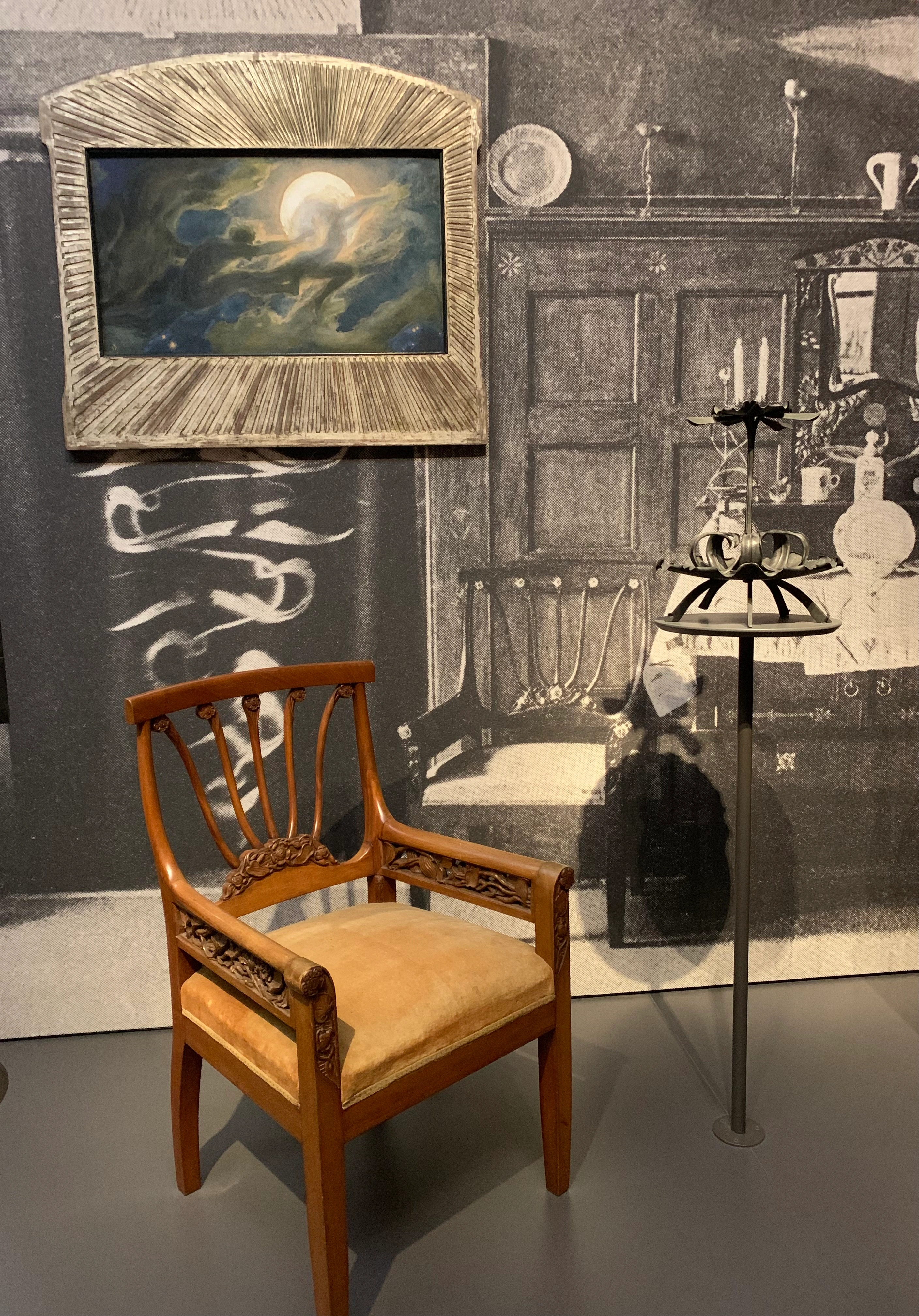
With Pieces for Works, Danish artist and composer Alexander Brix Tillegreen transforms the Kunsthalle Mannheim into a resonant space for seeing, hearing, and spatial perception. Ten newly developed, site-sensitive sound works enter into a dialogue with selected pieces from the museum's collection, opening an unusual aesthetic experience.
A museum as an acoustic resonance space
Alexander Brix Tillegreen, born in 1991 in Taarbæk, Denmark, lives and works in Copenhagen and Berlin. His artistic practice combines contemporary composition, sound installation, psychoacoustic phenomena, field recordings, and experimental instrumentation. In Mannheim, the sound works do not merely accompany the exhibits but stand as independent pieces that coexist with painting, sculpture, works on paper, and architecture.
The installations are spread across different rooms of the Kunsthalle. Some acoustic interventions are barely perceptible at the threshold of hearing, while others create an immersive sound zone. With each step, the exhibition atmosphere changes: spatial effects, distance, reverberation, and attention become components of the artwork's perception.
Dialogues between image, sound, and architecture
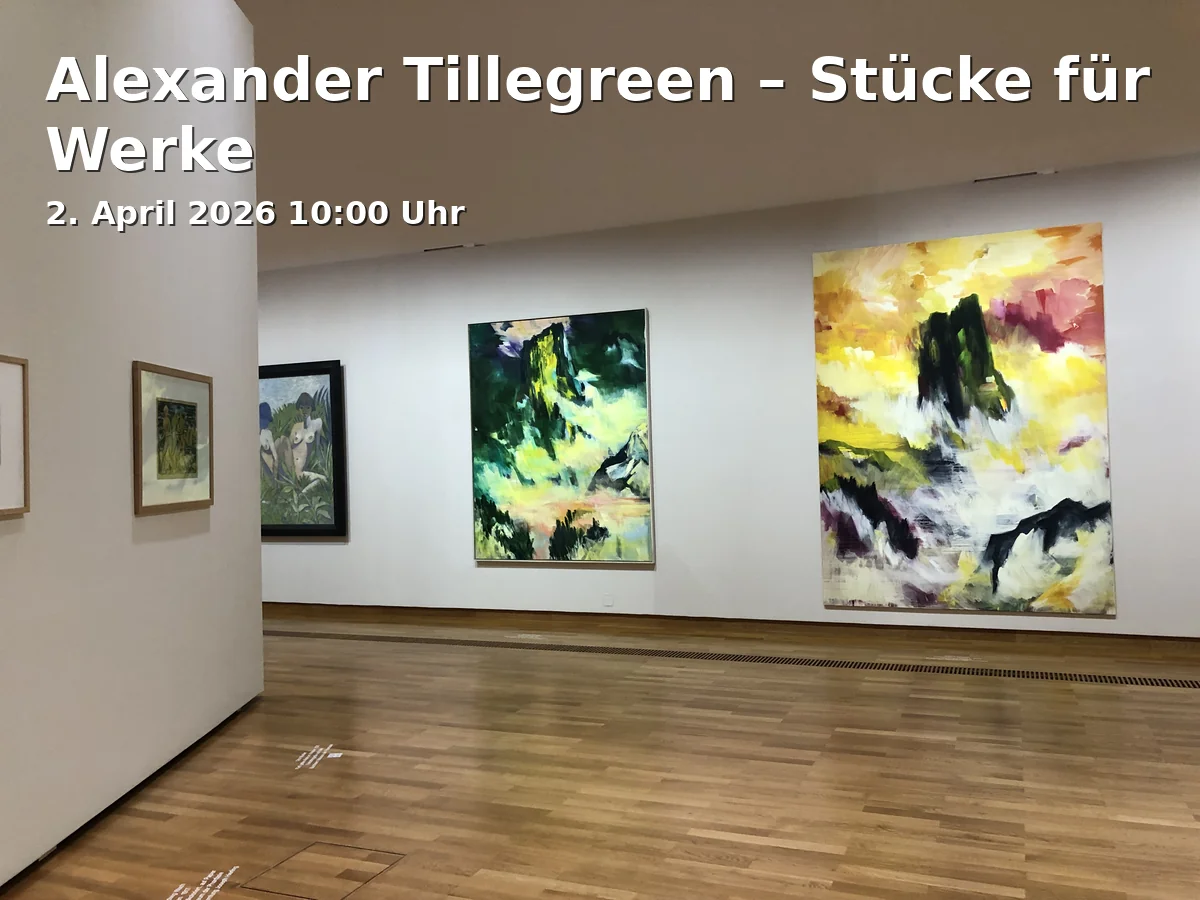
For his compositions, Tillegreen selected ten works from the collection of the Kunsthalle Mannheim as compositional starting points. These include works by Auguste Rodin, Rosemarie Trockel, László Moholy-Nagy, Anna Mahler, Francis Bacon, Edvard Munch, Isa Genzken, Édouard Vuillard, and Louise Nevelson.
The selected artworks do not provide mere illustrations for music. Their textures, rhythms, overlays, and spatial qualities are translated into auditory structures. Sound reacts to form, material, and movement, while the artworks gain a new temporal dimension through listening. Thus, an interdisciplinary installation emerges between fine arts, contemporary music, and media art.
From artwork perception to aesthetic experience
Particularly impressive is the slowed perception that Pieces for Works stimulates. Visitors move through sound zones, perceive individual tones from different directions, and experience the Kunsthalle as a sensitive instrument. The exhibition challenges not only the gaze but also conscious listening.
An example is Isa Genzken's sculpture Yamasaki: Tillegreen developed a vibraphone solo for it, whose dynamic movement recalls an architectural model. Louise Nevelson's monumental sculpture Vision One inspired a sound piece constructed with various wooden circles. Visual structure and musical composition thus enter into a precise, sensually perceptible relationship.
Sound art with an art historical perspective
The exhibition connects contemporary art with the collection history of the Kunsthalle Mannheim. Works from different eras and media encounter a current form of curation, in which hearing, seeing, and spatial orientation form equal paths to knowledge. Tillegreen's project simultaneously stands in the cultural context of Mannheim as a UNESCO City of Music.
The collaboration with the Berlin Ensemble Mosaik expands the compositions with instrumental and electronic sound colors. Clarinet, accordion, drums, vibraphone, electronic sounds, and field recordings form a multifaceted acoustic material. The exhibition thus appeals to both art history enthusiasts and visitors who wish to rediscover sound art and contemporary music.
Conclusion: Seeing, hearing, and perceiving art differently
Pieces for Works offers a concentrated art experience between installation, composition, and collection. The Kunsthalle Mannheim becomes a walkable sound body, in which familiar works develop new resonances. Those who take time for the aesthetic experience encounter art not only as a visible form but as atmosphere, movement, and memory. A visit is particularly worthwhile for anyone wishing to experience visual art and sound art in an unusual dialogue.
Official channels of Alexander Tillegreen:
- Instagram: no official profile found
- Facebook: no official profile found
- YouTube: no official profile found
- Website: no official profile found
Sources:
Frequently Asked Questions
Ähnliche Veranstaltungen
 16,00 €
2. Apr. 20262. April 2026
Alexander Tillegreen – Pieces for Works
Ausstellungen
 14,00 €
2. Apr. 20262. April 2026
Alexander Tillegreen - Pieces for Works
Ausstellungen
 16,00 €
2. Apr. 2026 10:002. April 2026 10:00
Alexander Tillegreen – Pieces for Works
Ausstellungen
 16,00 €
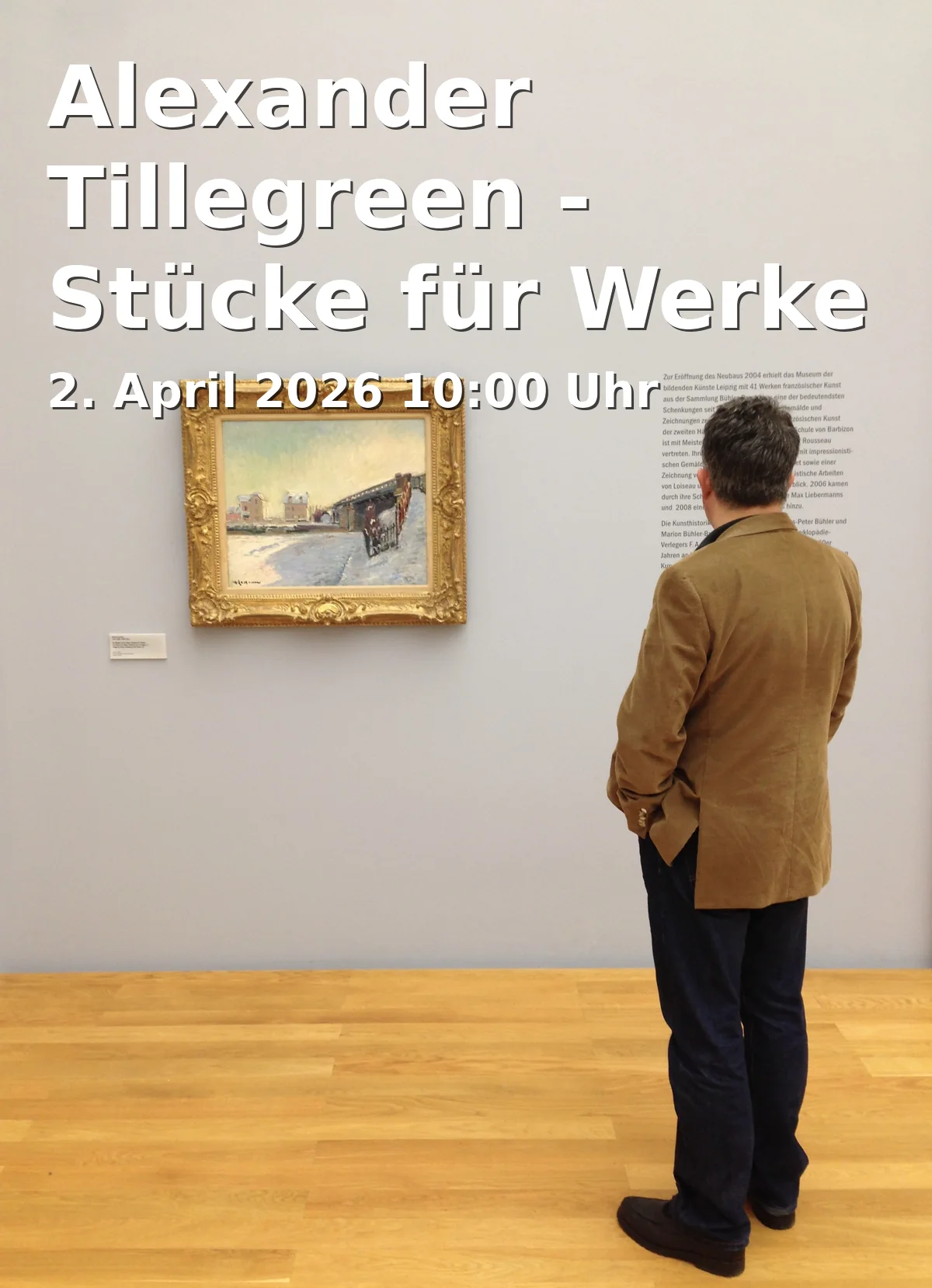
2. Apr. 2026 10:002. April 2026 10:00
Alexander Tillegreen - Pieces for Works
Ausstellungen
 Kostenlos
3. Sep. 2026 10:003. September 2026 10:00
STUDIO: Rasa Smite & Raitis Smits
Ausstellungen
 Kostenlos
3. Sep. 2026 10:003. September 2026 10:00
STUDIO: Rasa Smite & Raitis Smits
Ausstellungen
 Kostenlos
6. Sep. 2026 10:006. September 2026 10:00
STUDIO: Rasa Smite & Raitis Smits
Ausstellungen
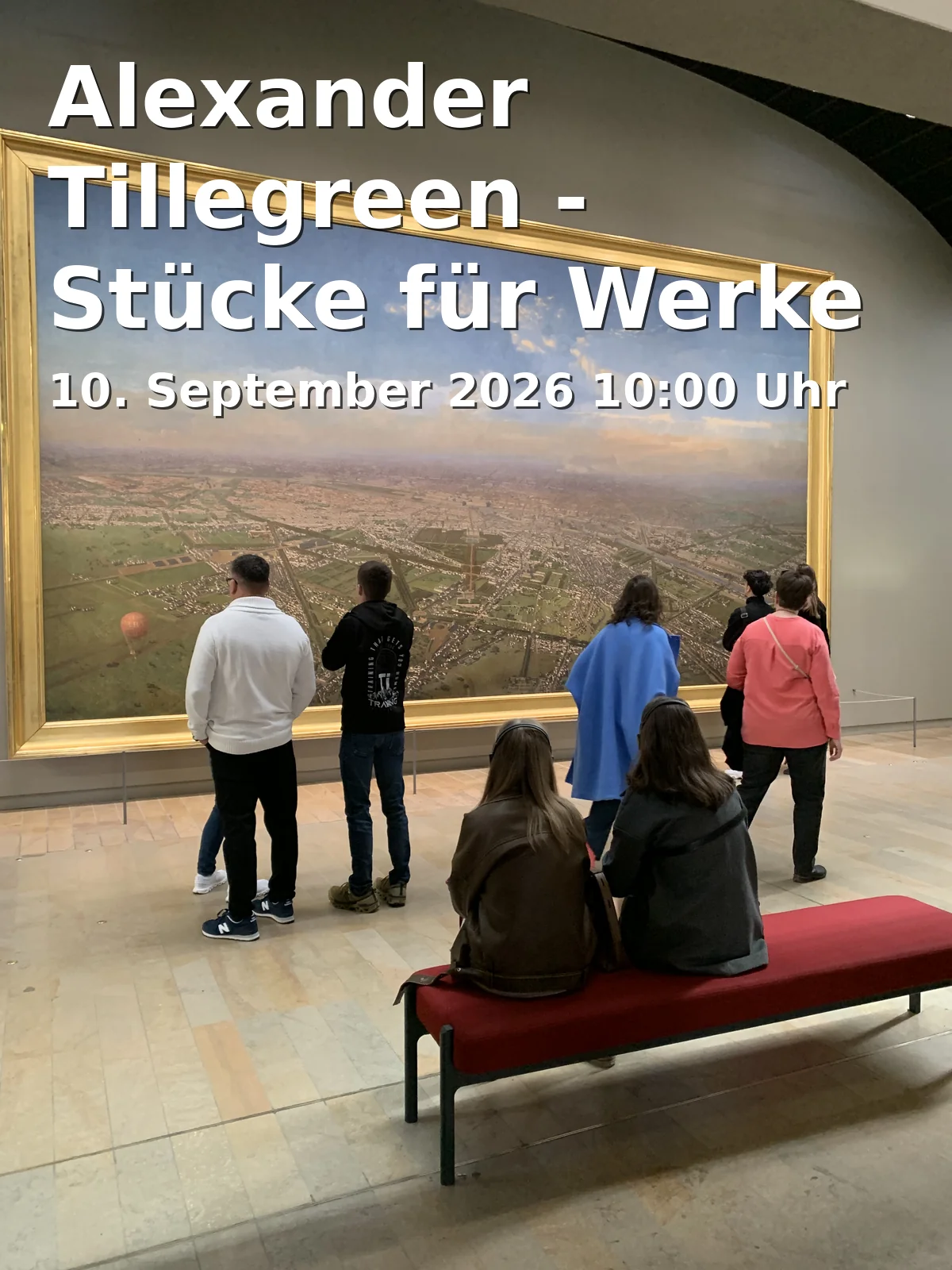 16,00 €
10. Sep. 2026 10:0010. September 2026 10:00
Alexander Tillegreen - Pieces for Works
Ausstellungen
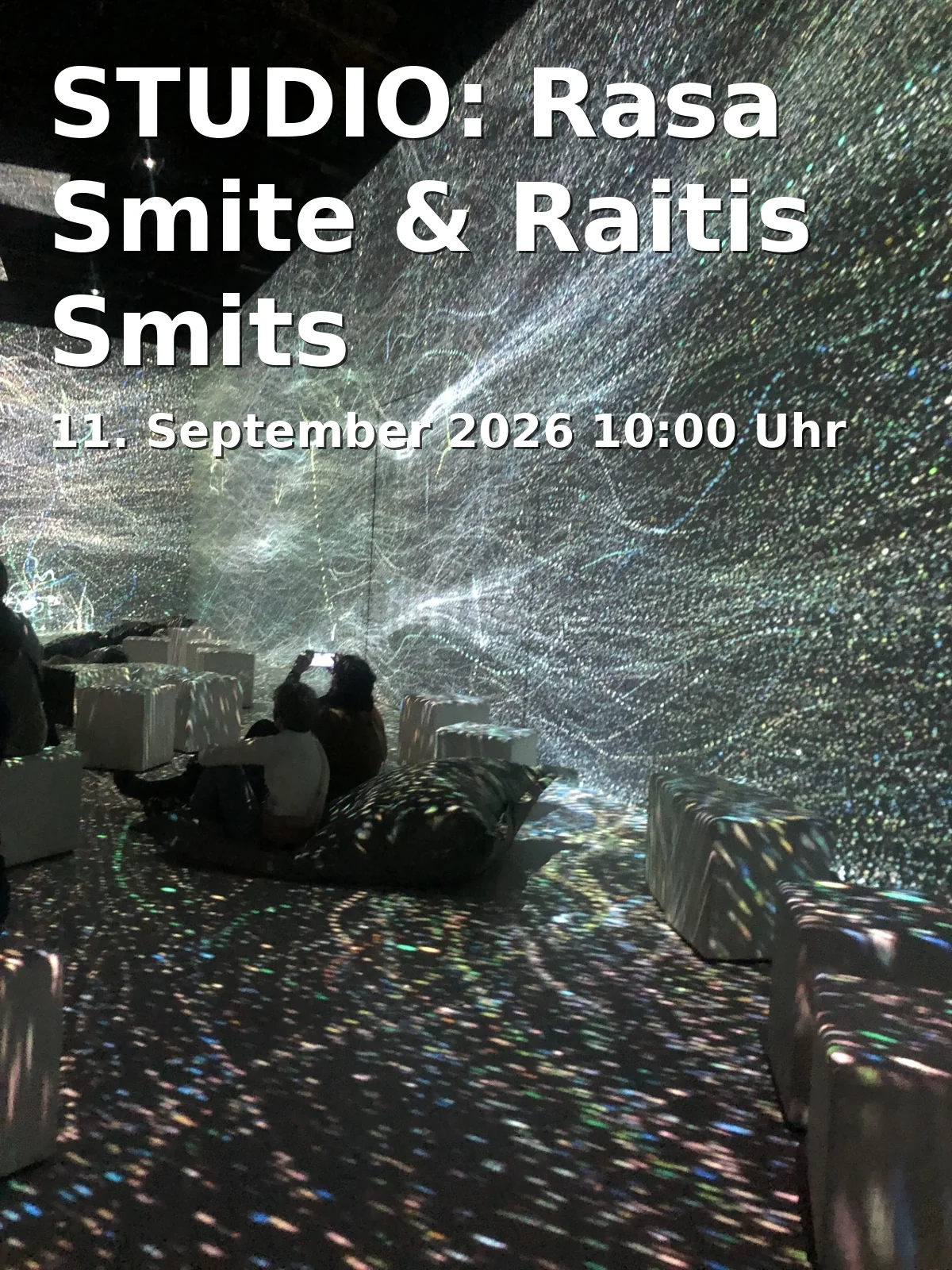
11. Sep. 2026 10:0011. September 2026 10:00
STUDIO: Rasa Smite & Raitis Smits
Ausstellungen
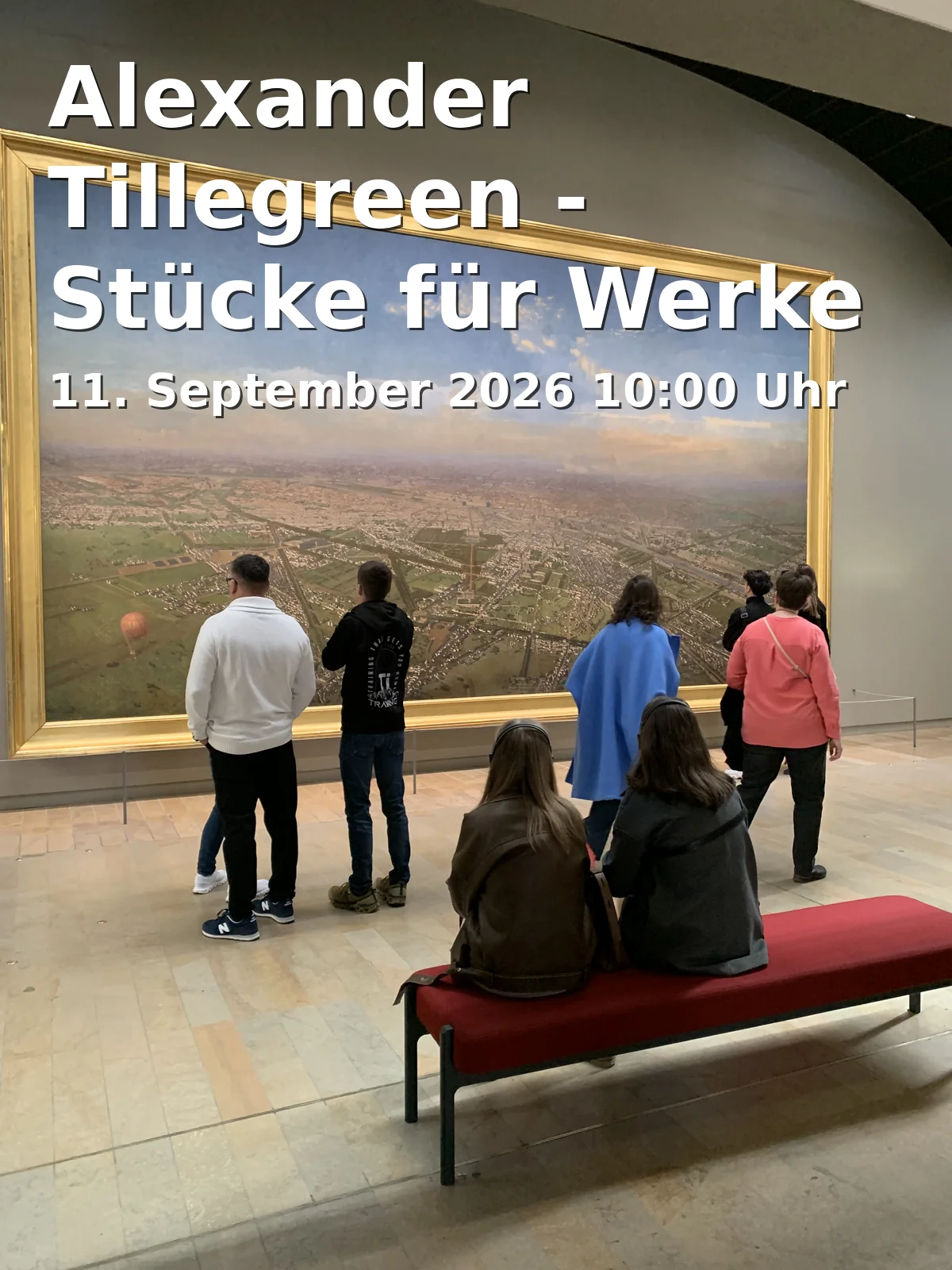 16,00 €
11. Sep. 2026 10:0011. September 2026 10:00
Alexander Tillegreen - Pieces for Works
Ausstellungen