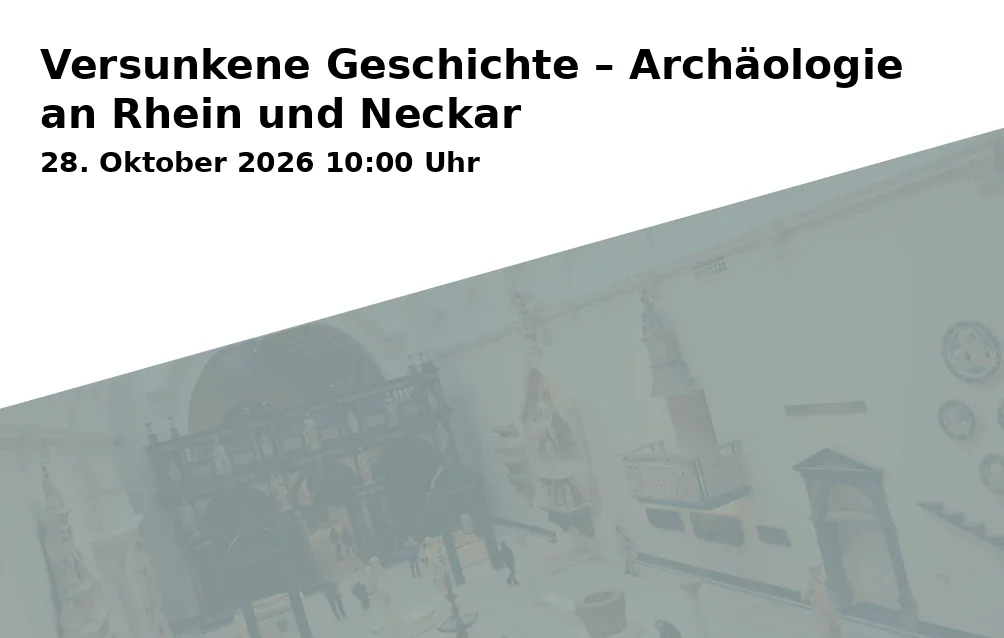
Sunken History at the Museum of World Cultures: Experience Archaeology at the Rhine and Neckar
Date and Time
Location
Price
About this Event
Mood
Venue Type
A Journey Through the Sunken History of the Region
The exhibition Sunken History: Archaeology at the Rhine and Neckar at the Museum of World Cultures of the Reiss-Engelhorn Museums takes visitors through thousands of years of regional cultural history. Extraordinary original finds, elaborate presentations, and interactive participation stations make the development of human living environments from the Stone Age to the early Middle Ages immediately tangible.
Traces of Early Humanity
In the exhibition area Human Time, visitors encounter the beginnings of human culture. Evidence of evolution, Stone Age tools, and vivid reconstructions offer an examination of artifacts that combines archaeological research with sensory observation. Colors, materials, and spatial setups condense the exhibition atmosphere into an impressive art experience.
Innovation in Metal and Social Change
The area Innovation in Metal shows how the processing of bronze, iron, and other materials changed technical development and social order. Finds from the Metal Ages tell of craftsmanship, trade, mobility, and cultural exchange along the Rhine and Neckar. The curation makes visible how closely technological innovation and social change are interconnected.
A Hint of Rome
The Roman era appears as a time of intense encounters. Archaeological objects illustrate daily life, economy, military presence, and cultural relationships in the region. The presentation combines scientific expertise with an atmospheric spatial effect and brings the Roman past to life in the aesthetic experience of the originals.
Wild Peoples and the Early Middle Ages
The tour continues to the Frankish living environments of the early Middle Ages. Grave goods, everyday objects, and other finds tell of identity, belief, social structures, and craftsmanship. This creates a nuanced picture of an era that long straddled Roman tradition and new political orders.
Cultural Education for Different Visitor Groups
Audio offerings, videos, downloadable materials, and inclusive communication formats broaden access to the exhibition. Offers in easy language, sign language, Braille, and audio description support diverse cultural education. Bookable tours and workshops are also available for school classes, preschool children, and inclusion groups.
Conclusion: Archaeology as a Living Art Experience
Sunken History does not, in a strict sense, connect painting, sculpture, and classical art, but unfolds a distinct aesthetic quality through original objects, staging, and museum mediation. The exhibition at the Museum of World Cultures provides insights into the history of the Rhine and Neckar and makes past living environments comprehensible with all the senses. Those who want to experience regional archaeology, historical originals, and inspiring cultural education should definitely visit this art experience live.
Official Channels of Reiss-Engelhorn Museums:
- Instagram: no official profile found
- Facebook: no official profile found
- YouTube: no official profile found
- Website: no official profile found