Sunken History at the Museum of World Cultures: Experience Archaeology on the Rhine and Neckar
Date and Time
Location
Price
About this Event
Mood
Venue Type
Sunken History: An archaeological journey through the Rhine and Neckar
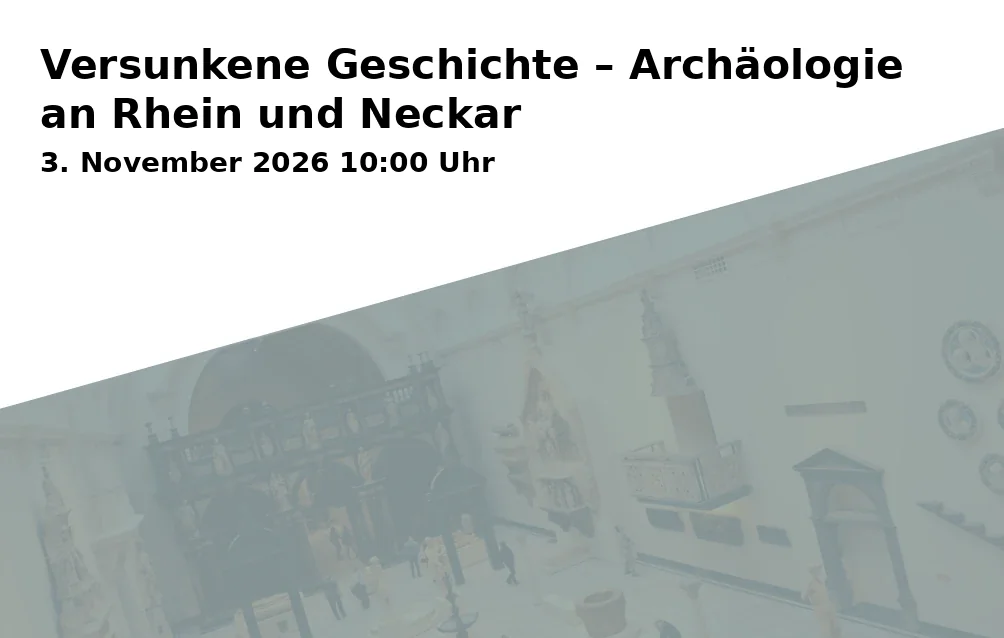
The Reiss-Engelhorn Museums invite you to an impressive journey through time from the Stone Age to the early Middle Ages at the Museum of World Cultures. The exhibition Sunken History. Archaeology on the Rhine and Neckar makes regional history directly experienced through extraordinary original finds, elaborate presentations, and interactive participation stations.
HumanTime: Encounters at the Beginning of History
The tour begins with the world of early humans. An atmospheric reconstruction brings to life a late summer day about 30,000 years ago, where Neanderthals and modern humans linger together under a rock shelter. Exhibits on art, hunting, gathering, living, and working provide a vivid examination of the Paleolithic and Mesolithic.
Innovation Metal: Technology Changes Society
In the section Innovation Metal, the exhibition shows how new methods of metal processing shaped societies on the Rhine and Neckar during the Bronze and Iron Ages. Tools, materials, and archaeological traces tell of technical knowledge, trade, and social changes. The aesthetic experience arises here in the interplay of material, surface, form, and craftsmanship precision.
A Hint of Rome: A Multicultural Region
On a Roman road flanked by tombstones and stelae, visitors encounter the Roman-Mediterranean way of life. This part of the exhibition makes visible how Celts, Germans, Neckarsuebi, and members of Roman troops influenced the region. Restored Roman stones, altars, and tomb monuments refer to religion, everyday life, and cultural networking between the 1st and 4th centuries.
Wild Peoples: Traces of the Early Middle Ages
Exotic trade goods and archaeological evidence lead into the early Middle Ages. They show how deeply the region was still shaped by Roman heritage and how far trade relations extended. The curation connects art historical classification with archaeological research and transforms scientific findings into a vibrant art experience.
Discovering Archaeology with All Senses
Eleven inclusive stations invite touch and exploration. Visitors can learn about the fur of Stone Age animals, representations of gods on a Roman stone, the gear of a Roman legionnaire, and medieval women's fashion. Braille and profile script, videos with sign language, audio format and subtitles, as well as offerings in easy language expand cultural education and allow for an accessible exhibition experience.
Museum Education for Families, Schools, and Groups
Guided tours, workshops, and digital offerings deepen the topics of the Stone Age, Neolithic Revolution, Metal Ages, Roman Antiquity, and Franks in the early Middle Ages. Interactive formats are available for school classes and kindergartens, including workshops on making a Stone Age instrument or Roman ceramics. Audio podcasts, videos, and the museum app complement the tour.
Conclusion: History Becomes an Immediate Experience
Sunken History combines original finds, atmospheric spaces, scientific expertise, and inclusive museum education to create a unique exhibition atmosphere. Anyone wanting to understand how people lived, worked, believed, and traded along the Rhine and Neckar will experience a multifaceted aesthetic experience here. A visit to the Museum of World Cultures enriches the view of regional history and makes archaeology as a lively present tangible.
Official Channels of Reiss-Engelhorn Museums:
- Instagram: no official profile found
- Facebook: no official profile found
- YouTube: no official profile found
- Website: no official profile found